
Plinko Game on Parimatch India: Complete Guide to Multipliers, Rows, Risk Levels & RNG Fairness

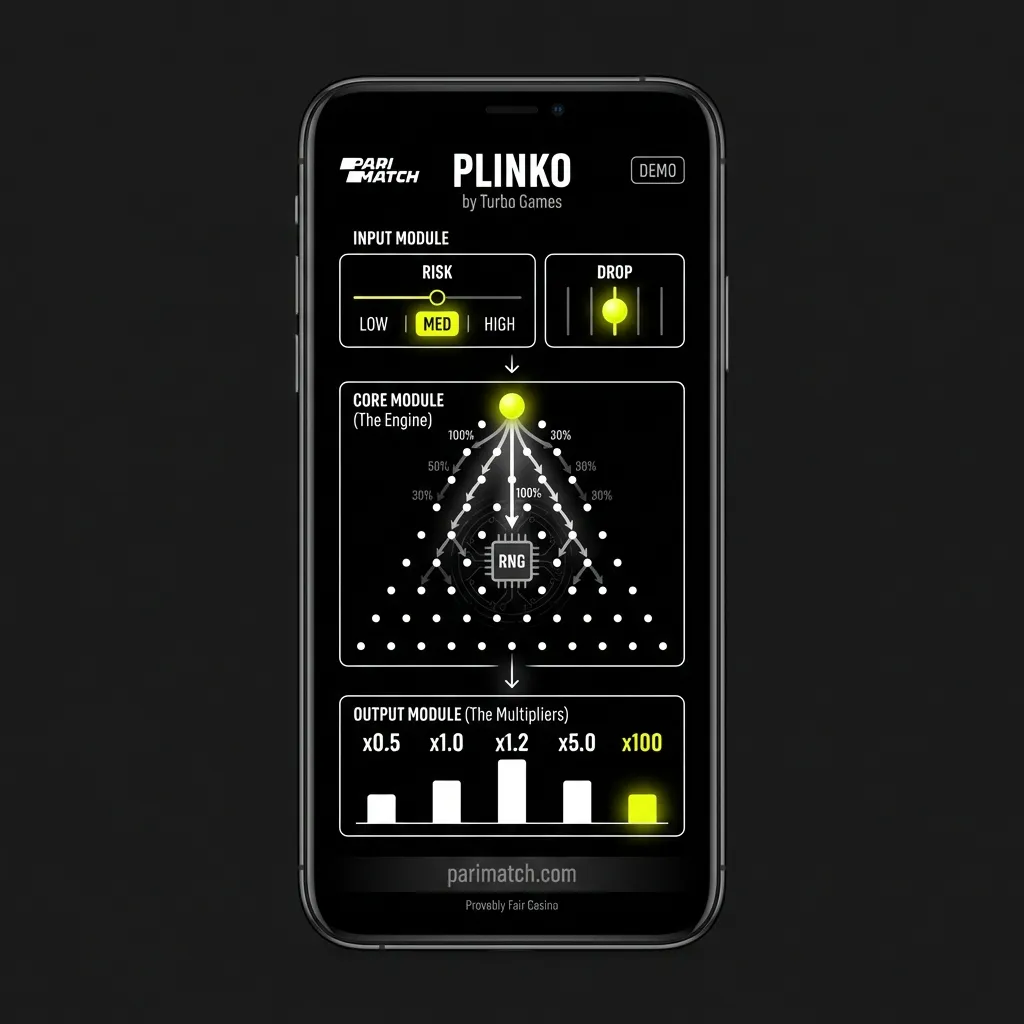
Plinko is one of the most recognisable instant titles and ranks high among popular Parimatch casino games. Many users search for Plinko India when they want a clear pegboard game with multiplier pockets. The board sends each dropped ball into a chain of pegs, and the final result lands in a pocket determined only by RNG. You can adjust risk levels and row count before each drop, which is why the Plinko game online attracts users who prefer short sessions with structured choices. The title uses Provably Fair tools to keep every round transparent. You can open Parimatch Plinko in the casino section and play with INR stakes. Many Indian users view Plinko casino India as a fast way to explore high and low multiplier paths without needing complex controls.

Get a special promo code Plinko game

Valid as of February 2026

FREE300
Plinko game on Parimatch India - complete guide to multipliers and RNG

What Is Plinko? Comprehensive Overview for Indian Players

A Plinko review usually starts with the core idea: a ball drops through a triangular pegboard and ends in one of many multiplier slots. For the optimal experience, enjoy this classic game as the Plinko game in Parimatch mobile casino. Every collision with a peg shifts the ball left or right in an unpredictable pattern, which is why you should know how Plinko works, as it is based on pure randomness. The game is an instant game with no skill factor, no timing advantage, and no predictive element. Outcomes depend entirely on the RNG provider behind the title, and each drop operates as an independent event. To make your session even more rewarding, don’t forget to check out the available Plinko bonuses for mobile players.

Plinko remains popular among Indian users because rounds are short, the visual layout is clear, and the game runs well on nearly any smartphone. Players choose the number of rows, select a risk level, and set a stake before dropping a ball. Higher risk levels usually introduce greater multipliers on the edges, while lower risk levels keep the payout structure more stable. Some versions of Plinko also display different RTP values and multiplier ranges, but the core structure stays unchanged across platforms. The blend of visual motion and mathematical randomness keeps the gameplay direct and accessible for a wide audience.

How the Peg System Works

A Plinko board uses a peg grid built from many small Plinko pegs arranged in a triangular layout. Each peg acts as a micro-junction, a set of bounce points where the ball shifts direction. Every contact represents decision nodes inside the game logic, but the visible movement is only an animation. The shift to the left or right is controlled by ball movement RNG, not by physics or timing. The ball’s entire route is determined before it begins to fall, so the random bounce you see is a visual layer placed on top of the true result.

The board shape creates a predictable probability curve: central pockets receive more landings, while the edge pockets hold high multipliers with low hit rates. Players cannot influence the path, and no input changes the odds, since all outcomes come from the internal RNG rather than physical motion.

Plinko Providers on Parimatch India: Which Version You Actually Play

Parimatch hosts several Plinko variants from different studios, and each version brings its own RTP range, volatility curve, and visual style. Spribe offers the best-known model, built with a Provably Fair system and a clean layout similar to Aviator. BGaming provides a high-RTP setup that can reach 99% and includes extra row customisation. Turbo Games supplies the quickest format with rapid animations and auto-drop features. The core gameplay stays the same across all versions, but multiplier tables and risk profiles vary in noticeable ways.

BGaming Plinko

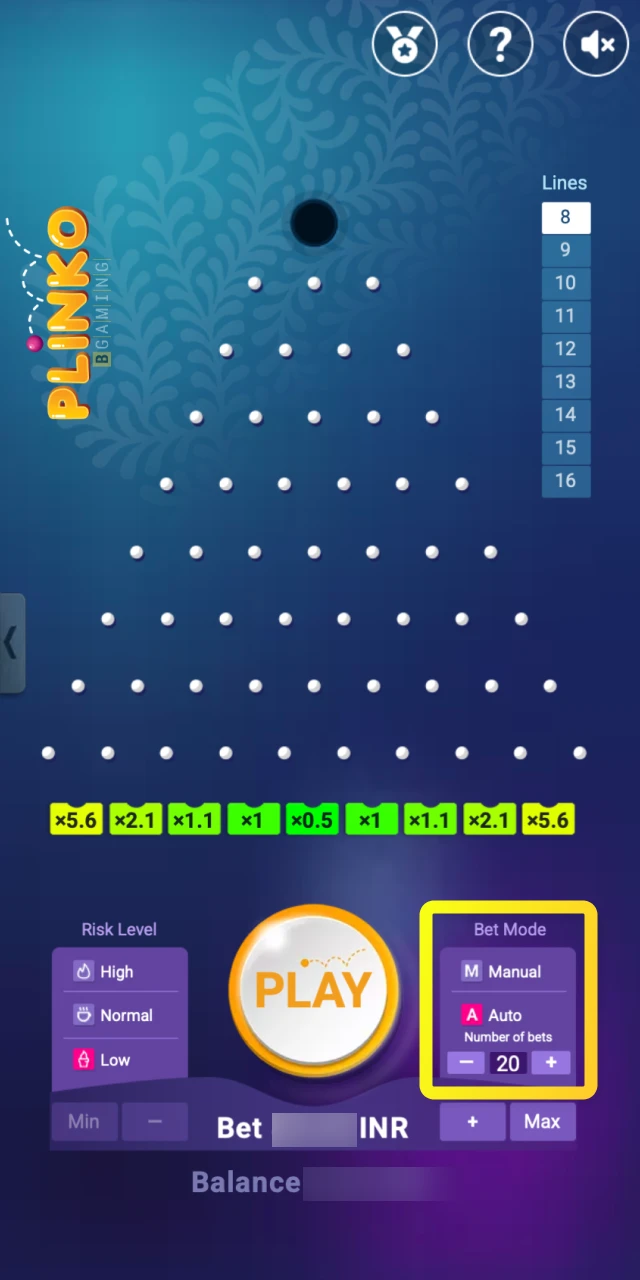
BGaming provider, known for its high-return titles, offers a Plinko version with an RTP close to 99%. The layout includes flexible rows customization, usually from 8 to 16 rows, which creates a balanced volatility curve suited for steady play. The visual style stays clean, while multiplier pockets follow a predictable spread. Many Indian players who prefer low-risk sessions choose BGaming’s Plinko because it provides stable returns and a calm pace.
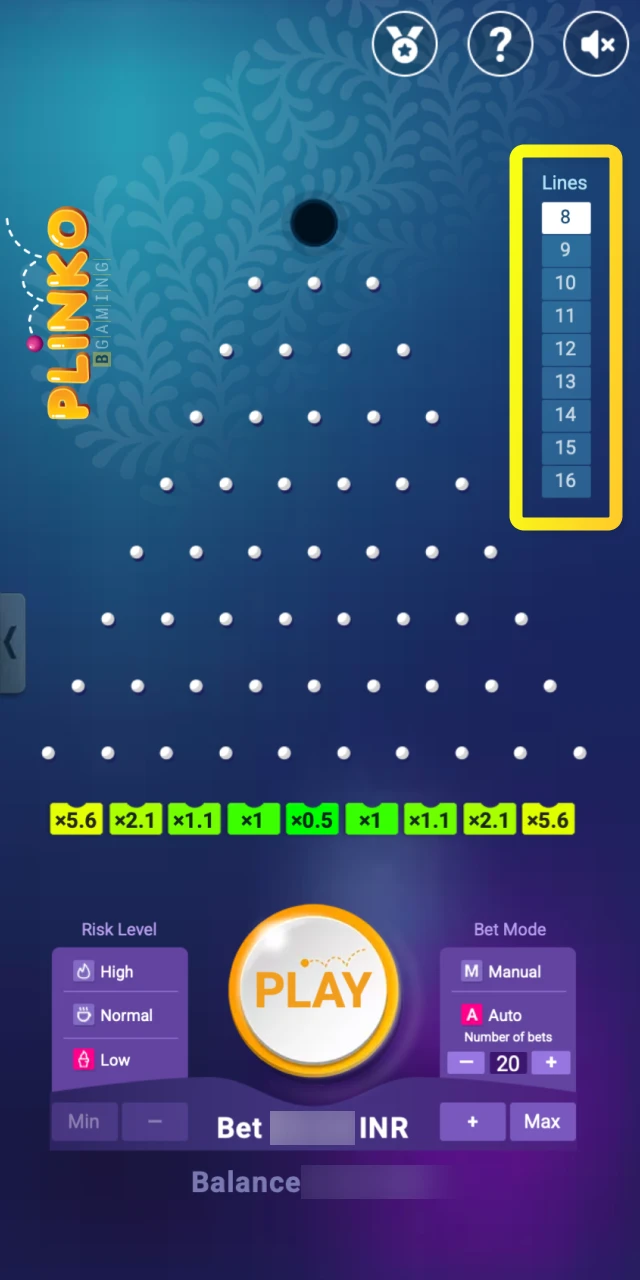
Spribe Plinko

Spribe delivers a Provably Fair Plinko model built on server seed, client seed, and SHA-256 hash verification. Each round can be checked manually, which appeals to users who want transparency similar to Aviator. The layout uses Spribe’s signature minimal design with a dark backdrop and bright multiplier pockets. Volatility is sharper than BGaming’s version, and outcomes lean toward a more dynamic risk curve.

Turbo Games Plinko

Turbo Games offers the quickest Plinko format, with fast animation and rapid ball drops that give the session a constant pace. The volatility is high variance, and multiplier swings are more dramatic. Many users in India prefer this version when they want short, high-energy rounds. Auto-drop features are also common, supporting continuous play without long delays.

Game Interface Breakdown

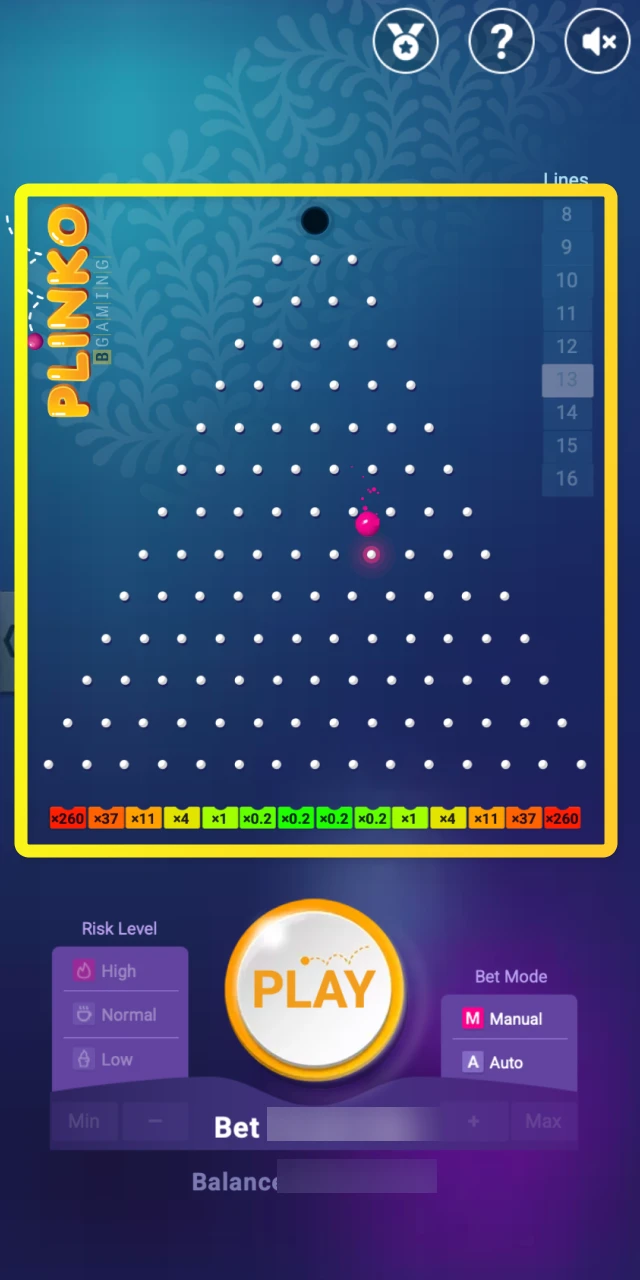
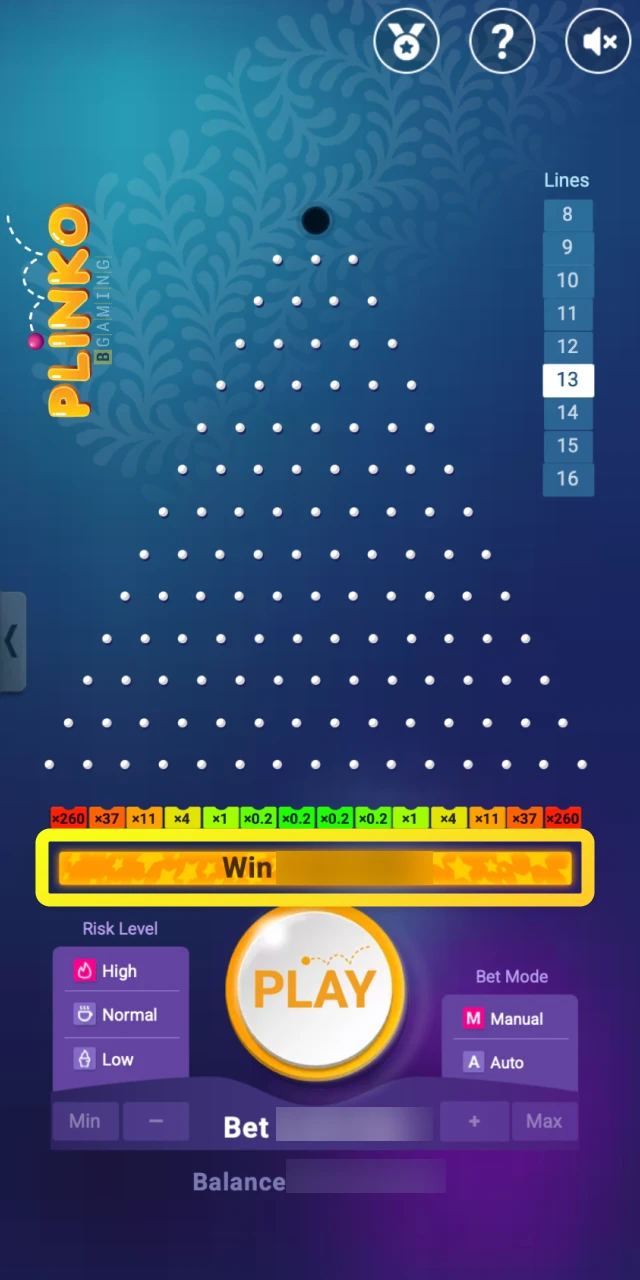
The UI in Plinko on Parimatch India stays clear and organised so new users can move through each control without confusion. The top section holds the bet panel, the risk selector, and the rows selector, while the centre of the interface displays the peg grid and ball-drop area. Multiplier pockets shift whenever you adjust rows or risk. A history panel sits on the side and records previous results. The layout groups everything in a way that keeps the screen uncluttered and helps users focus on the next drop.

Bet Controls

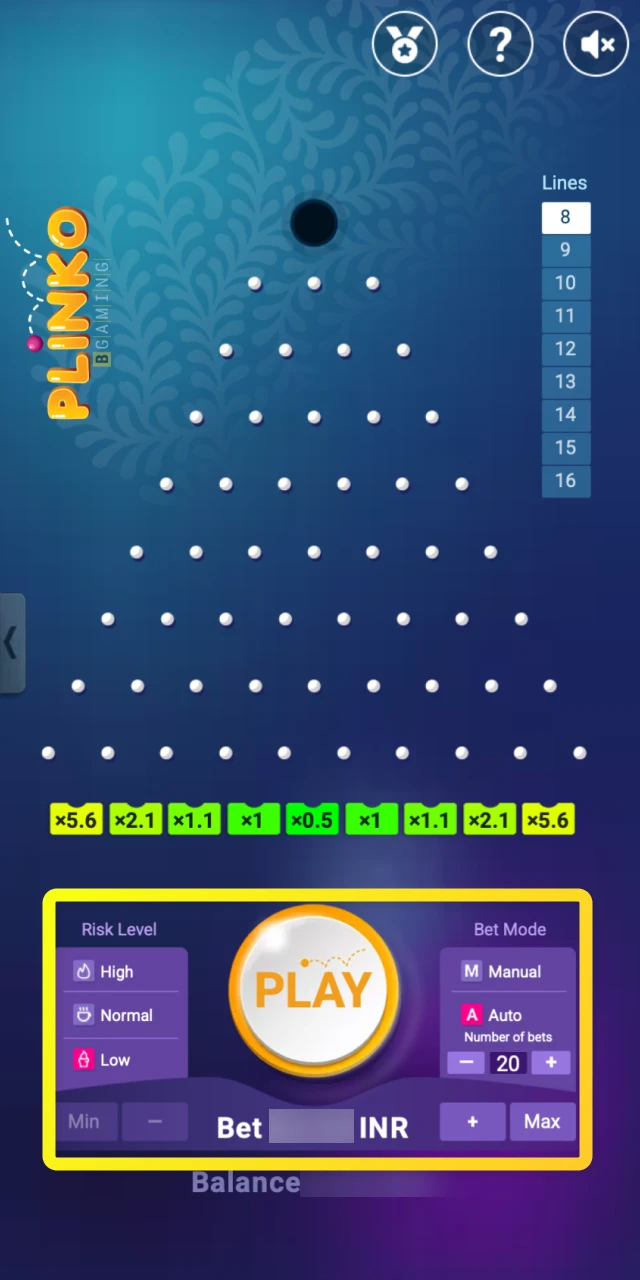
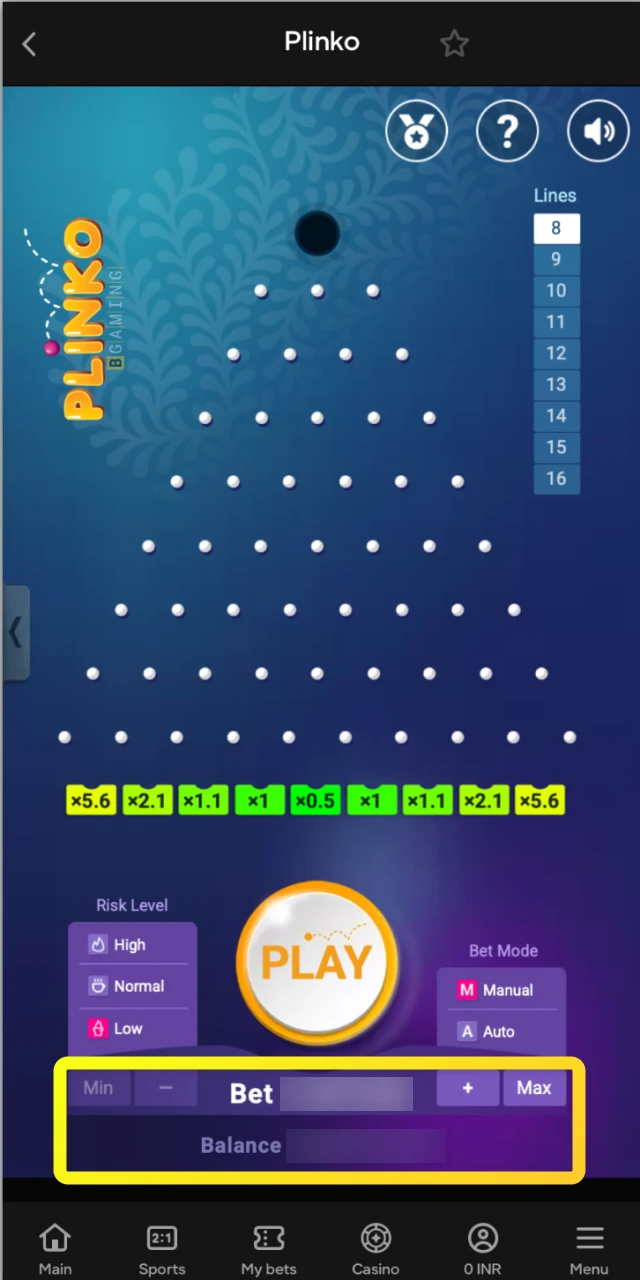
The game supports INR bets through a clean stake selection area. Users can tap preset amounts such as ₹10, ₹50, or ₹100, or enter a value manually. The system accepts low minimum stakes, which suits many Indian players who prefer controlled sessions. Changing your stake does not shift probability; the peg grid behaves the same at every amount. Higher or lower bets only affect the size of the final payout.

The interface for setting and adjusting your bet amount in the Plinko game on Parimatch.

Rows Selector

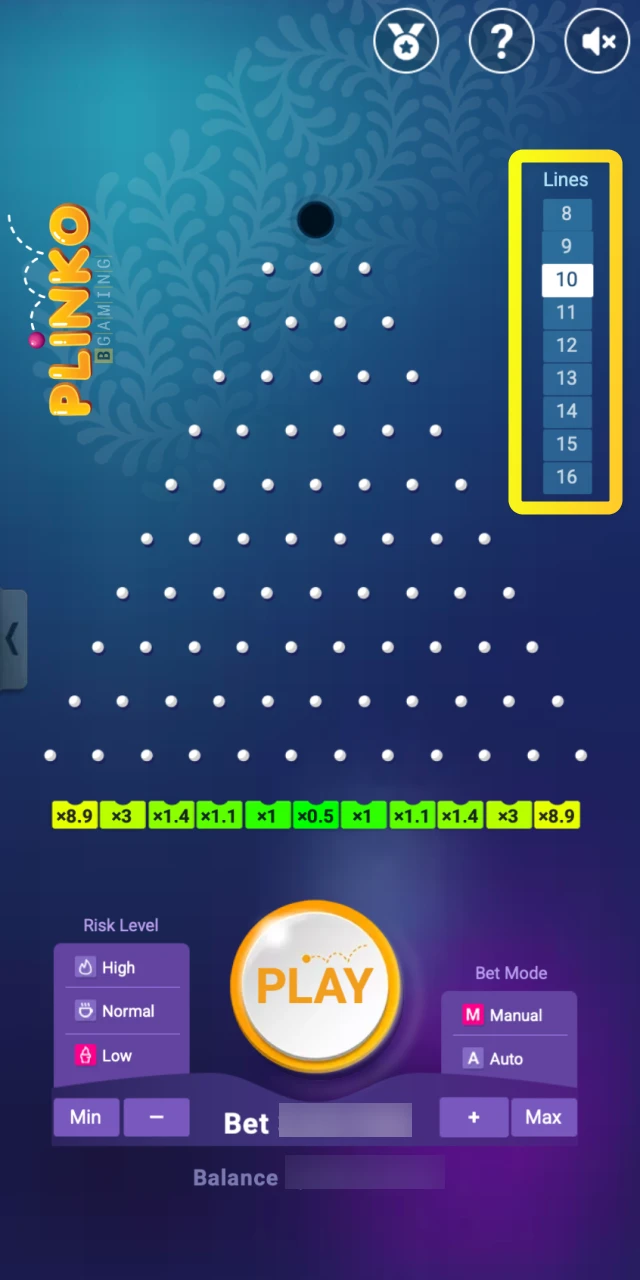
The rows selector controls the height of the board, with common options such as 8 rows, 12 rows, and 16 rows. Taller grids create more bounces, which increases volatility and widens the payout curve. Each time the user shifts rows, the multiplier pockets refresh and display new values. This control gives users the freedom to choose how much unpredictability they want in each drop.

The tool for selecting the number of rows on the Plinko board to change volatility on Parimatch.

Risk Levels Selector

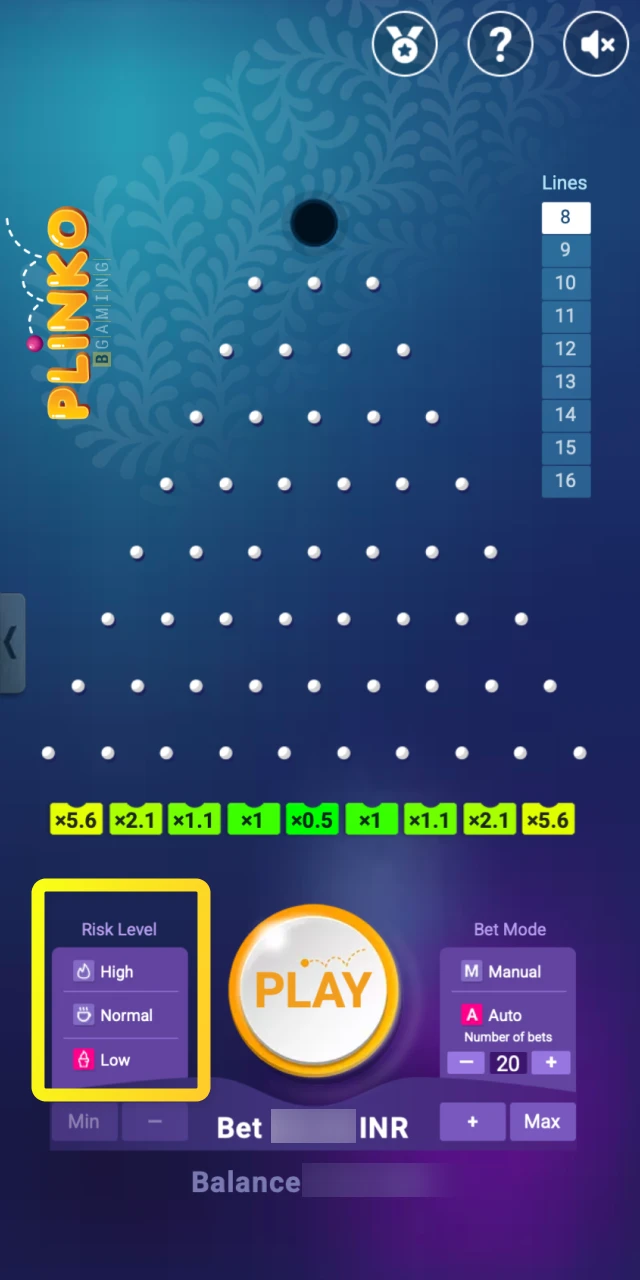
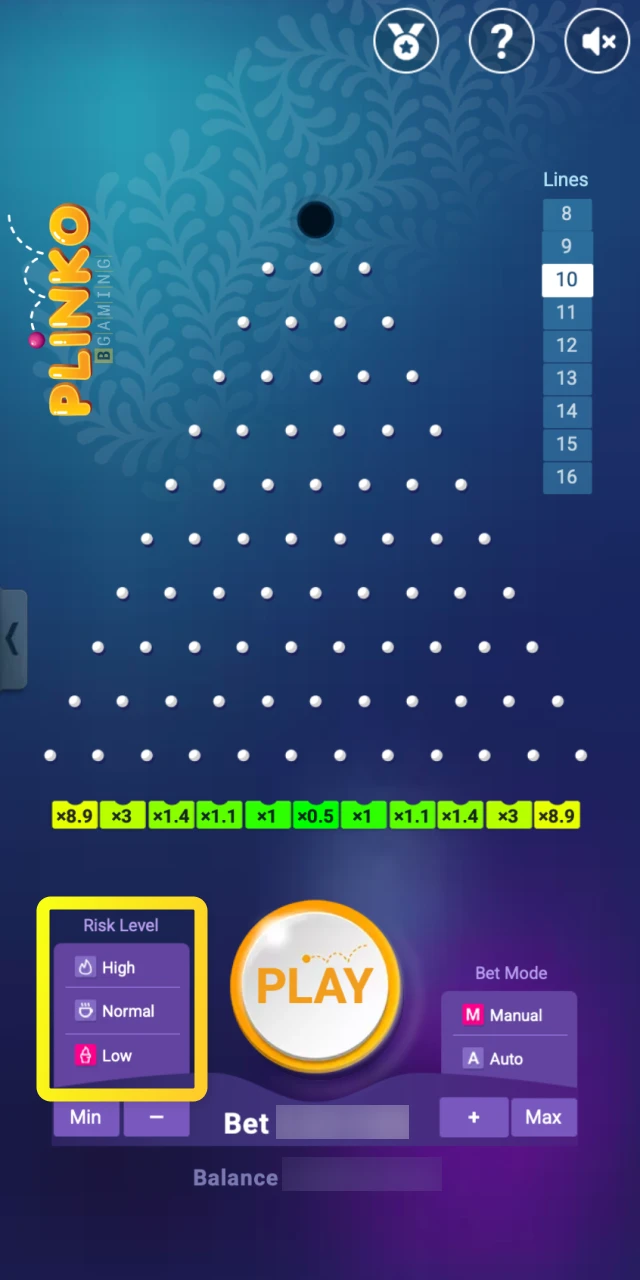
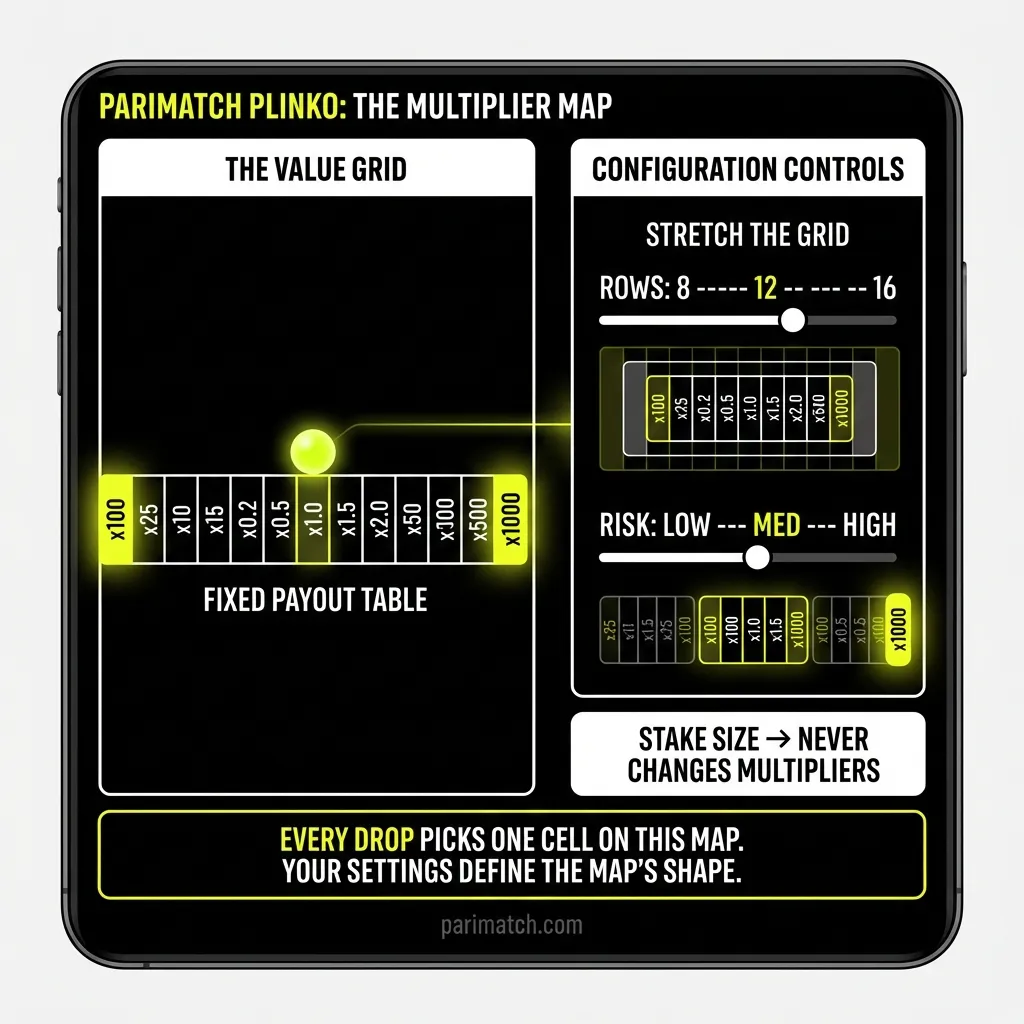
Plinko includes a risk slider that shifts multipliers into low, medium, or high patterns. In risk mode set to high, the payout spread stretches out, placing large multipliers on the outer pockets and lowering central ones. Low mode keeps the curve tight with fewer extreme outcomes. The system helps users understand how volatility changes before they drop the next ball.

The control for choosing between low, medium, or high-risk multiplier tables in Plinko.

Auto Mode & Turbo Mode

The game includes auto mode for users who want a hands-off sequence of drops. They choose how many balls to release, and the system performs each auto ball drop under the same settings. This helps users run longer sessions without tapping the screen repeatedly. Turbo mode India shortens the visual sequence, using fast animation so the ball reaches the pocket much quicker. Both tools support quick rounds and give players tighter control over how quickly they want the game to move, without changing the underlying probability curve.

The settings panel for enabling automatic or turbo game modes in Plinko on Parimatch.

Multi-Ball Mode

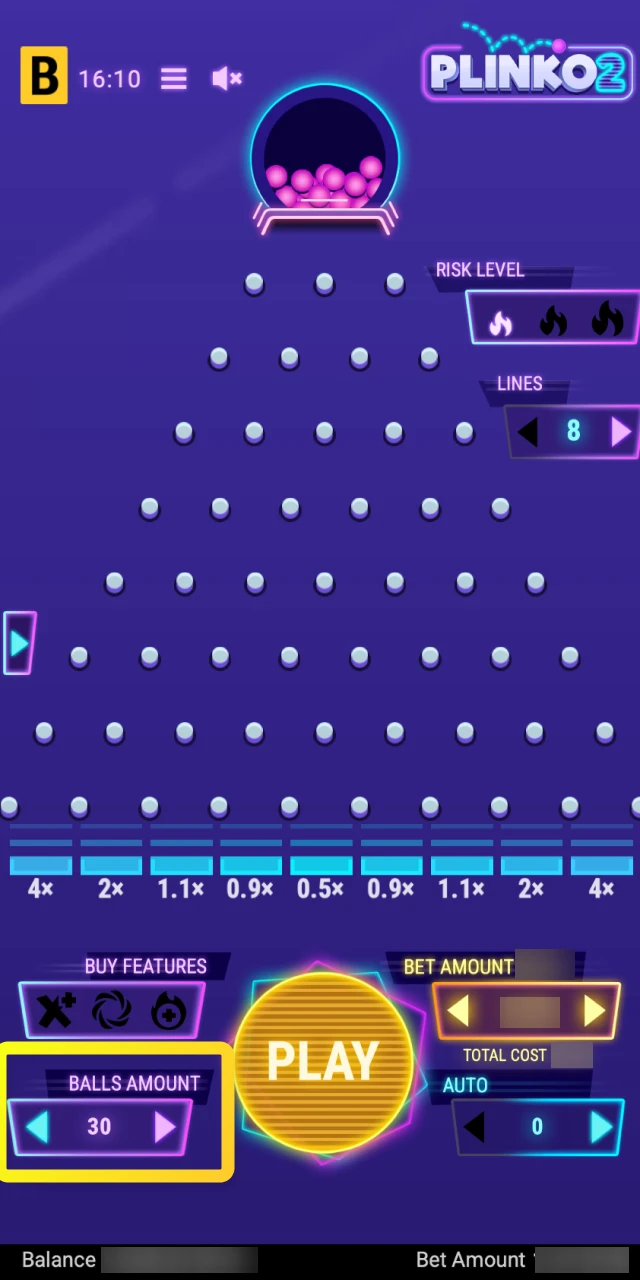
Plinko includes a multi-ball drop feature where users release multiple balls at the same time instead of sending them one by one. The game displays simultaneous results, which helps users view many outcomes quickly, especially when using India Plinko auto settings. The probability behind each ball remains the same for every drop, and no ball affects the next one. The mode works well for users who prefer short sessions with many results but want to keep the same rules and fairness as single-ball play.

The interface for activating multi-ball mode to play with several balls simultaneously in Plinko.

History Panel

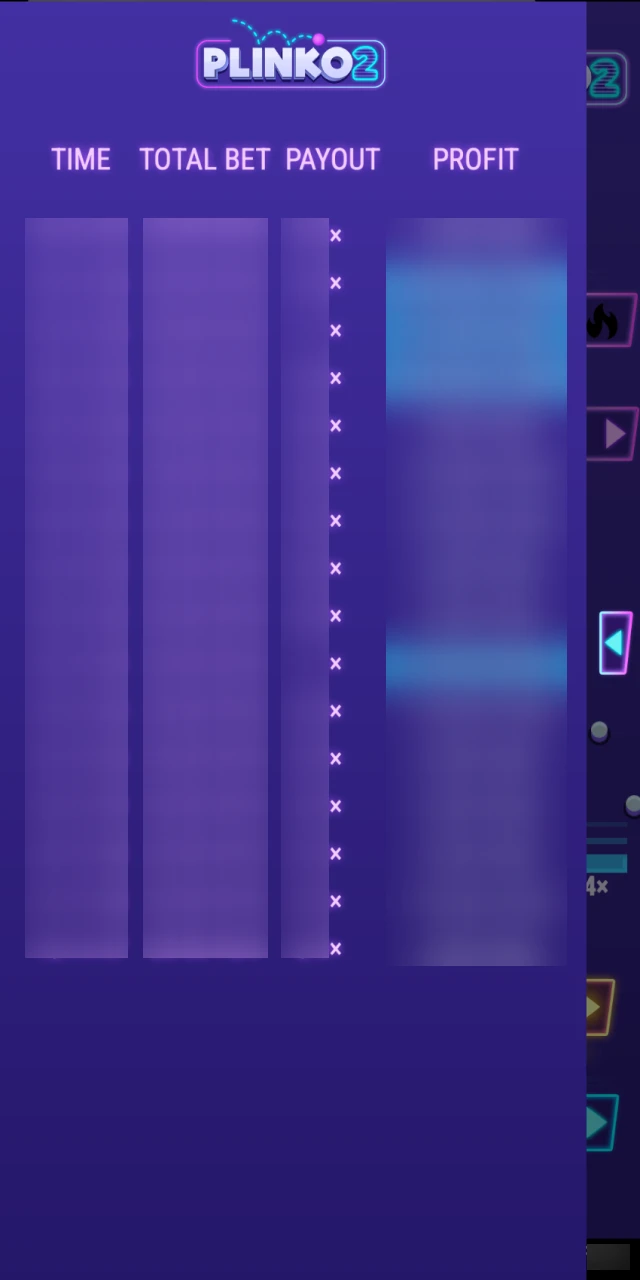
The History section keeps a multiplier log that shows how recent balls landed across the pockets. Users can also review their bet history with stake size, result, and timestamp, forming a clear gameplay record for each session. The panel helps players understand how their budget moved over time and spot their own habits, such as how often they switch risk levels or rows. No part of the history predicts what comes next, since every drop follows independent RNG rules, so the panel serves only as a tracking tool, not a guide for future outcomes.

The history panel displaying recent results and multiplier outcomes in Parimatch Plinko.

How to Play Plinko: Step-by-Step Guide for India

Understanding how to play Plinko on Parimatch India comes down to a short sequence of actions, and each one shapes the outcome. To start dropping balls and aiming for the high multiplier pockets, the first step is to register and play Plinko online. The controls sit in one place, the layout is clear, and players only adjust a few settings before the ball drops. RNG decides the path, so no action taken after pressing Play can influence the movement. The structure suits Indian users who prefer short, clear sessions with direct choices and quick results. The Plinko guide India below keeps the flow direct and easy to follow.

Step 1

Set Your Stake

Set your stake in the bet panel and choose the bet step that fits your budget.

Adjust your bet amount and select a bet step that suits your budget in the Plinko game.

Step 2

Select Board Height

Select the number of rows. A taller board increases volatility, while a shorter board keeps changes smaller.

Choose the number of rows on the Plinko board to influence the games volatility on Parimatch.

Step 3

Choose Risk Level

Pick a risk level: low, medium, or high. Each level adjusts the multiplier pockets at the bottom.

Select your preferred risk level to change the multiplier values in Plinko on Parimatch.

Step 4

Start the Round

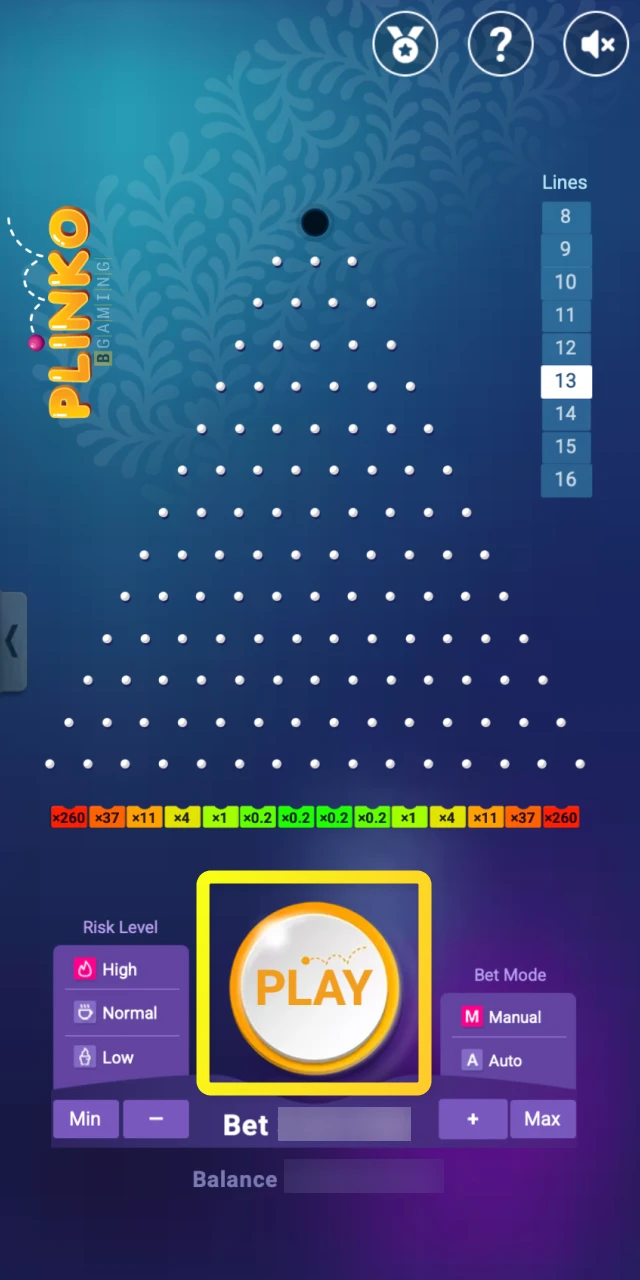
Press Play to start the drop step and release the ball into the peg grid.

Press the play button to initiate a new round and release the ball in Plinko.

Step 5

Watch the Ball Drop

Watch the ball move through the pegs until it reaches a multiplier slot.

Observe the ball as it bounces through the peg grid towards a multiplier slot in Plinko.

Step 6

Receive Your Payout

Once it stops, the payout calculation shows how much the stake returned.

Collect your payout after the ball lands in a final slot, determined by the multiplier on Parimatch.

Rows System Explained: 8–16–18 Rows Volatility Model

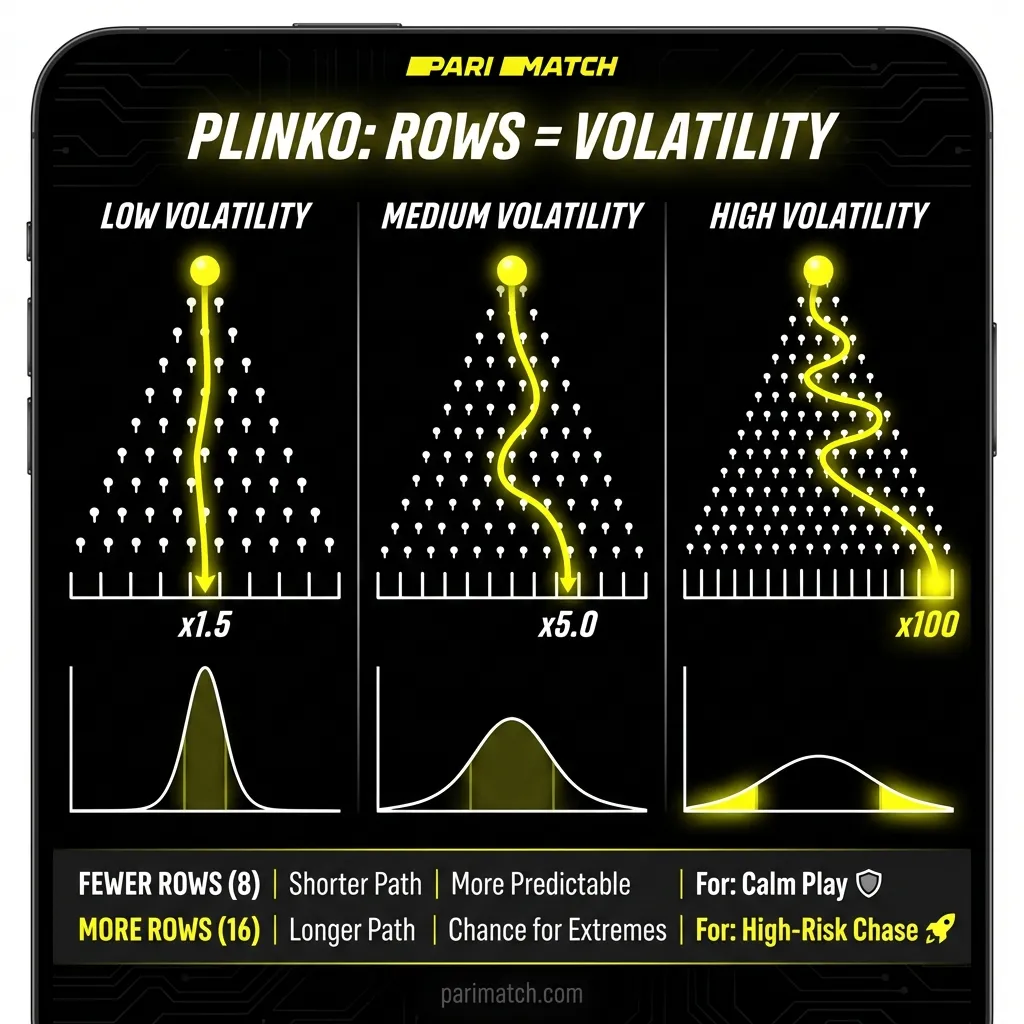
Plinko’s row count shapes its entire risk profile, and players on Parimatch see clear differences once they compare 8 rows, 12 rows, and 16 rows. Fewer rows create a shorter path with fewer peg contacts, reducing randomness and forming a tighter probability curve. Outcomes land closer to the center since the ball has fewer decision points, and the rows volatility stays low. Increasing the row count increases peg interactions, widens movement possibilities, and raises the impact of RNG. As the ball travels through many layers, the curve spreads outward, pushing more hits toward both high and low multipliers. High-row boards also shift the risk level by extending the distance between the safest pockets and the extreme edges. Players who want calm sessions prefer short boards, while users seeking higher stakes and edge multipliers choose taller boards.

Plinko rows system explained - 8-16-18 rows volatility model on Parimatch

Low-Row Plinko (8–10 Rows)

Low-row boards create a narrow distribution that helps keep results near the center. The board has fewer pegs, so the bounce pattern stays center-weighted, with most outcomes settling in moderate multipliers. Risk stays lower because the ball travels through fewer decision points, and volatility remains mild. Players using low volatility setups often choose these boards when they want steadier payouts and fewer extreme swings.

High-Row Plinko (14–16 Rows)

High-row setups create a wide distribution, stretching the curve across many more pockets. Players see a stronger split between central pockets and edge multiplier zones, which push results into rare high payouts or deep losses. The taller layout increases bounce randomness, raising the impact of high row volatility. These boards attract players who enjoy extreme volatility and who want a chance at larger multipliers despite the higher risk of edge drops.

How Row Count Changes the Probability Curve

Plinko follows a binomial curve where outcomes cluster around the center. Fewer rows compress the distribution spread, producing a narrow curve with most results landing in the middle. Adding more rows widens the curve, spreading outcomes across a larger area and sending more balls toward higher and lower pockets. The board height directly alters the probability India patterns and reshapes the row curve.

Risk Levels: Low / Medium / High

Risk settings shape how rewards sit across the volatility spectrum. A low-risk layout keeps multipliers close together, reducing extreme highs and deep lows. A medium risk layout spreads rewards wider and often suits Indian players who prefer steadier sessions. A high-risk layout stretches the payout curve sharply, placing very large edge multipliers with minimal hit probability. The setting does not alter ball movement or animations; it only changes payout values. Choosing a risk level depends on bankroll size, session goals, and comfort with volatility.

Plinko risk levels explained - low, medium, high settings on Parimatch India

Center Pockets vs Edge Pockets

Center pockets sit along the distribution center, so most balls land there as the reward curve pushes outcomes toward the middle. These pockets usually hold modest multipliers and form the stable core of Plinko payouts. Edge pockets sit at the far ends, and the game treats them as low-frequency pockets because the probability drops sharply as the ball moves away from the center. These side pockets carry the biggest multipliers in the layout, yet they appear in very rare moments. The contrast between frequent center hits and rare edge results defines Plinko’s volatility structure.

Why Edges Pay the Highest Multipliers

Edge pockets sit at the distribution extremes, so only a small share of balls reach them. The game treats these outcomes as low-probability rewards, which is why the edge multipliers rise far above the values found in the center. Providers assign high payouts to balance the tiny hit rate, and the result is a zone defined by extreme volatility. Players often notice the visual appeal of the side pockets, yet they should remember that these positions trigger far less frequently than central pockets. High multipliers are tied directly to low probability, not to any strategy or pattern.

Volatility Breakdown by Provider

Plinko volatility India varies widely across developers, and each provider builds its own payout curve. BGaming keeps volatility at a steady level, as its board layout and multiplier spread stay closer to the center of the distribution. Spribe raises volatility through sharper swings and stronger edge payouts, which increases tension across each drop. Turbo Games stands at the top of the volatility range because its aggressive multiplier spread widens the gap between common and rare outcomes. Players often sense how each version shifts the pace of wins and losses, but the core randomness remains identical across all providers.

Plinko Multipliers & Payout Model

Multipliers in Plinko shift according to risk level and the number of rows. Central pockets usually sit in the 0.2x, 0.5x, 1x, and nearby ranges, while edge pockets can jump to 10x, 100x, or even 1000x depending on the provider and configuration. The structure is fixed before the ball drops, as the system assigns every pocket its value in advance. Changing stake size never alters multiplier values since payout calculation follows the same table for all users. Higher rows and higher risk settings stretch the payout curve, sending low multipliers toward the center and pushing extreme numbers toward the edges. Each drop lands in one static pocket, so the entire result depends on the ball’s final position rather than any action during the fall.

Understanding Plinko payout structure - central vs edge multipliers

Low-Risk Multiplier Table

Low-risk mode uses compressed multipliers that cluster outcomes in a safe range. Central pockets often hold values from around 0.5x to roughly 10x, and the ball tends to land there due to the narrow distribution. Edge pockets exist but stay far lower than in medium or high-risk modes. Sessions with low-risk settings usually feature more stable swings because extremes appear less often.

Medium-Risk Multiplier Table

Medium risk introduces balanced pocket values, stretching both the lower and upper sides of the payout table. Central results still occur most frequently, yet edges gain extra strength and can carry noticeably higher multipliers. This setup appeals to users who want a mix of stability and occasional spikes. The board widens enough to create visible differences between wins and losses while staying more controlled than high-risk mode.

High-Risk Multiplier Table

High-risk mode leans on extreme pockets and high variance. The center pockets become far less rewarding, and most of the payout potential sits near the edges. Providers often attach rare multipliers such as 200x, 500x, or even 1000x to the far-left and far-right pockets. These rewards come with very low hit rates, which is why high-risk sessions swing hard in both directions. Users drawn to dramatic outcomes usually choose this mode.

RTP Depending on Risk + Rows

Plinko RTP India depends on risk settings and row count, so that values can shift slightly even for the same provider. Low rows and low-risk settings stay closer to RTP 96%, while higher rows and higher volatility settings may move the figure a bit. RTP describes long-term return to player, not short-term expectations. It reflects millions of simulated drops and does not tell any player what a single session will look like. Row height and risk simply adjust the volatility factor, but the randomness remains constant across all configurations.

Fair Play: RNG, Provably Fair & Certification

Plinko outcomes on Parimatch India come from licensed RNG systems that generate each result before the animation begins. These systems follow strict rules so that every ball drop has an independent, unpredictable outcome. Providers submit their engines for audits, and test reports confirm fairness, stability, and compliance with industry standards. The peg animation on the screen does not reflect real physics; it visualizes what the RNG has already produced. Parimatch India hosts versions from providers that pass external certification checks, which adds transparency and credibility. Users can rely on structured fairness verification procedures that prevent any alteration of results during gameplay.

How SHA-256 Verification Works (Spribe)

Spribe uses a combination of server seed and client seed to generate each Plinko result. The system forms a hash from these values, and the hash for the next round appears before the ball drops. After the round, users may copy the seeds and compare them with SHA-256 tools to confirm that the result stayed unchanged. The generated hash must match the displayed one, which proves integrity. That method offers strong transparency because verification does not depend on trust in the provider.

How Non-Provably-Fair Providers Ensure Fairness

Some Plinko versions do not use SHA-256 verification but rely on certified RNG engines checked by recognised certification labs such as iTech Labs or GLI. These audits test millions of rounds, confirm statistical randomness, and ensure that payout curves follow published specifications. Providers receive compliance reports after passing each audit cycle. The system stays secure because audited games cannot alter outcomes during play.

Plinko Strategy: Risk Management Only

Plinko does not include any form of skill influence, so users cannot change the path of the ball or direct it toward specific pockets. Every drop follows an independent RNG outcome, and the best approach focuses on discipline instead of prediction. A clear bankroll limit helps users control the pace of their play, while structured session planning keeps balance swings under control. Risk level and row count shape volatility, so selecting the right mix matters more than trying to “read” patterns in previous drops. Low-risk settings reduce extreme losses, while high-risk setups can push swings higher. Users who set personal goals for each session stay more stable during rounds, since emotional decisions often lead to unnecessary balance loss. No sequence on the board increases the chance of a specific result, so the safest path relies on measured choices about stake size and session duration rather than any attempt to anticipate future pockets.

Safe Strategy

A safe approach relies on low-risk settings combined with medium rows. This mix creates a narrow payout range and reduces sharp balance swings, which helps users stay in control during long sessions. Mid-row boards still provide enough variation to keep results steady without exposing the balance to extreme pockets on the edges. Users who prefer slower sessions often choose this setup because it supports steady play and reduces pressure during each drop.

Balanced Strategy

A balanced setup relies on medium risk together with medium-high rows, creating a mix of stability and sharp swings. This layout widens the spread enough to reach stronger pockets while still keeping the board manageable. Users who prefer medium-term sessions tend to choose this path because it sits between safety and high volatility. The board produces a mix of modest hits and occasional stronger payouts, offering a steady rhythm without pushing the balance into extreme zones.

High-Risk Strategy

A high-risk setup leans fully into extreme volatility, with the board shaped to hit edge zones far less often. The focus shifts toward high payout pockets, since these hold the largest multipliers in Plinko. Such a plan suits users who accept wide bankroll swings and do not mind long runs of low results in exchange for a chance at rare peaks. Stability drops sharply, and sessions often move quickly through wins and losses, so a clear budget limit is essential.

Why “Plinko Tricks” Do Not Work

Many users search for hidden paths or timing tricks, yet the game does not produce exploitable patterns. Every drop comes from independent outcomes tied to RNG, not physical movement or timing. Peg collisions you see on the screen only visualize random events that were already decided before the ball appears. No sequence of past results can guide the next one, and no pocket becomes “due”. Any trick based on color streaks, drop angles, or ball rhythm fails for the same reason: the system resets probability for every round and keeps each result isolated.

Common Player Mistakes

Many users fall into the same traps. High-risk mode with a small bankroll leads to quick losses, and many believe patterns exist when the drops stay random. Volatility is often ignored, though it shapes how wide the payout spread can go.

Pattern-Chasing Fallacy

Some players look at streaks in the history log and expect certain pockets to appear again. The game does not work this way because results rely on RNG with independent outcomes. A long chain of similar multipliers does not shift the odds. No pocket gains a higher probability after a streak. The peg grid animation only displays a result that the system determined earlier, so no observation can lead to “better timing”. Pattern-chasing usually drains budgets faster because users place trust in sequences that have no connection to the next result.

Bet Overstretching

A common mistake appears when users raise bets after losses to “recover” quicker. The game does not respond to bankroll swings, and a larger stake does not improve chances. Loss streaks can continue without warning due to random events. Increasing stakes raises exposure while keeping probability the same, which often leads to deeper losses. A fixed budget and stable bet range work far better for long sessions.

Wrong Risk Mode Selection

Many players choose risk modes that do not fit their bankroll size. High-risk pockets carry extreme volatility and require a larger budget to survive long swings. Low-risk settings keep the payout curve narrow but reduce the chance of very high wins. Medium risk sits between both ends. Choosing a mode aligned with session goals and balanced size prevents sudden losses and creates a steadier flow across drops.

Deposits & Withdrawals for Plinko on Parimatch India

Parimatch deposits India support INR payments through UPI, Paytm, PhonePe, GooglePay, and IMPS. To begin your Plinko session, you’ll first need to fund your balance to play Plinko. The minimum deposit starts at 300 INR, while the maximum typically reaches 50,000 INR per transaction. Funds appear quickly through local rails such as UPI and wallet-based channels, and withdrawals use the same systems whenever possible. Some requests may need KYC checks before release, and processing varies across providers. Parimatch lists clear limits for each method inside the cashier, ensuring users can pick the option that fits their budget.

UPI Plinko India supports local payments in INR networks. Below is a short table with key details:

Method Deposit Withdrawal Limits (Min–Max)
UPI (PhonePe/Paytm/GPay) Yes Yes 300–50,000 INR
Paytm Wallet Yes Yes 300–50,000 INR
PhonePe Wallet Yes Yes 300–50,000 INR
IMPS / NetBanking Yes Yes 300–50,000 INR

All channels work directly in INR.

KYC Notes

Parimatch KYC India may be required when users request withdrawals or cross certain account thresholds. The verification process usually includes ID proof, address proof, and confirmation of payment ownership. Once verified, accounts can withdraw without interruptions unless future security checks are triggered.

Withdrawal Timing Expectations

Parimatch withdrawal time India depends on the provider’s processing queue speed. UPI channels often send funds fast during active hours, though delays can occur during bank maintenance or account reviews. IMPS and wallet routes show similar patterns, with timing controlled by banks and payment partners. The cashier section shows each request’s current status so users can track progress at any moment.

Plinko Demo Mode on Parimatch India

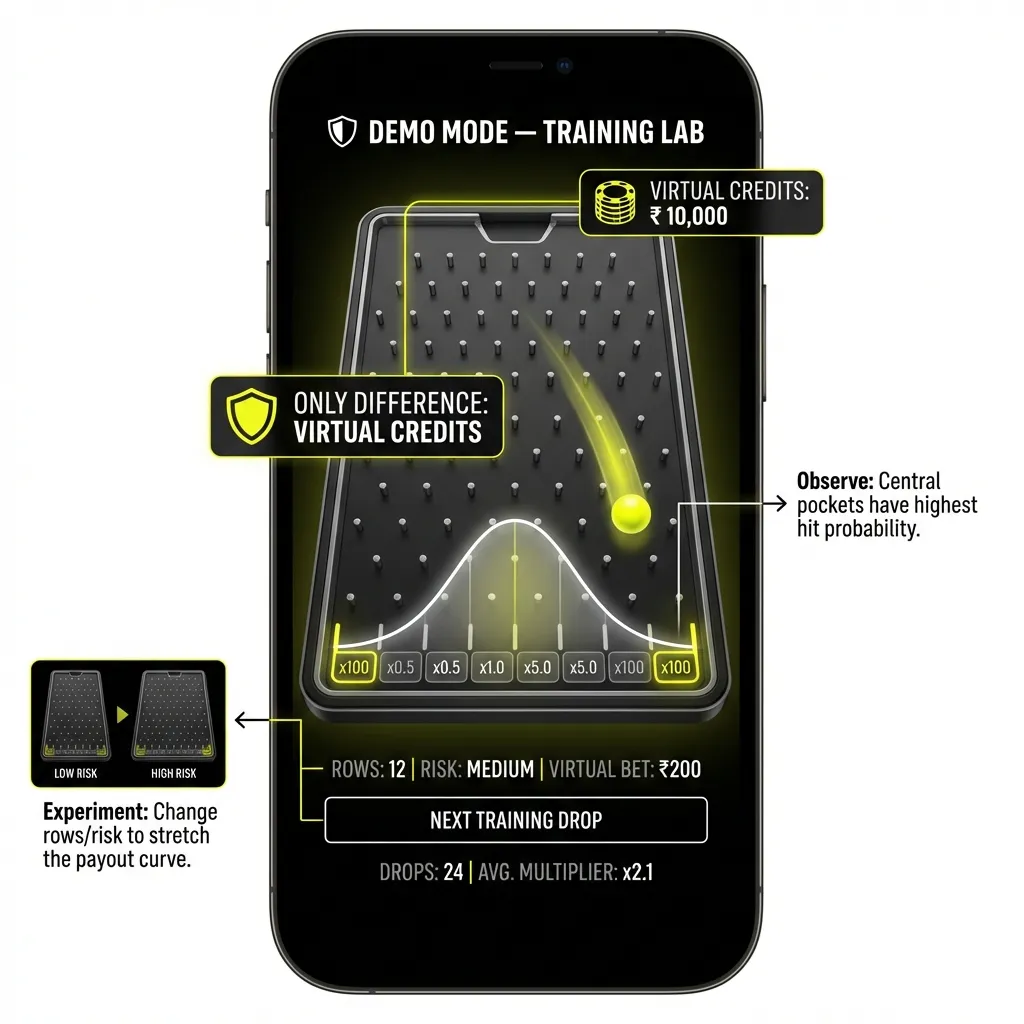
Plinko demo India mirrors real-money gameplay because the board layout, pocket multipliers, and RNG logic stay identical in both modes. Users can try the free demo without registration or deposits, which helps them understand how volatility behaves across different row counts and risk settings. The no-risk mode shows how the ball shifts toward central pockets more often and how edge multipliers fall inside the low-probability zone. Demo outcomes do not predict real rounds, but the mode helps users study multiplier patterns, adjust settings, and form a clear view of how the game responds to each configuration.

Plinko demo mode on Parimatch India - try the game for free

Final Verdict: Is Plinko Worth Trying?

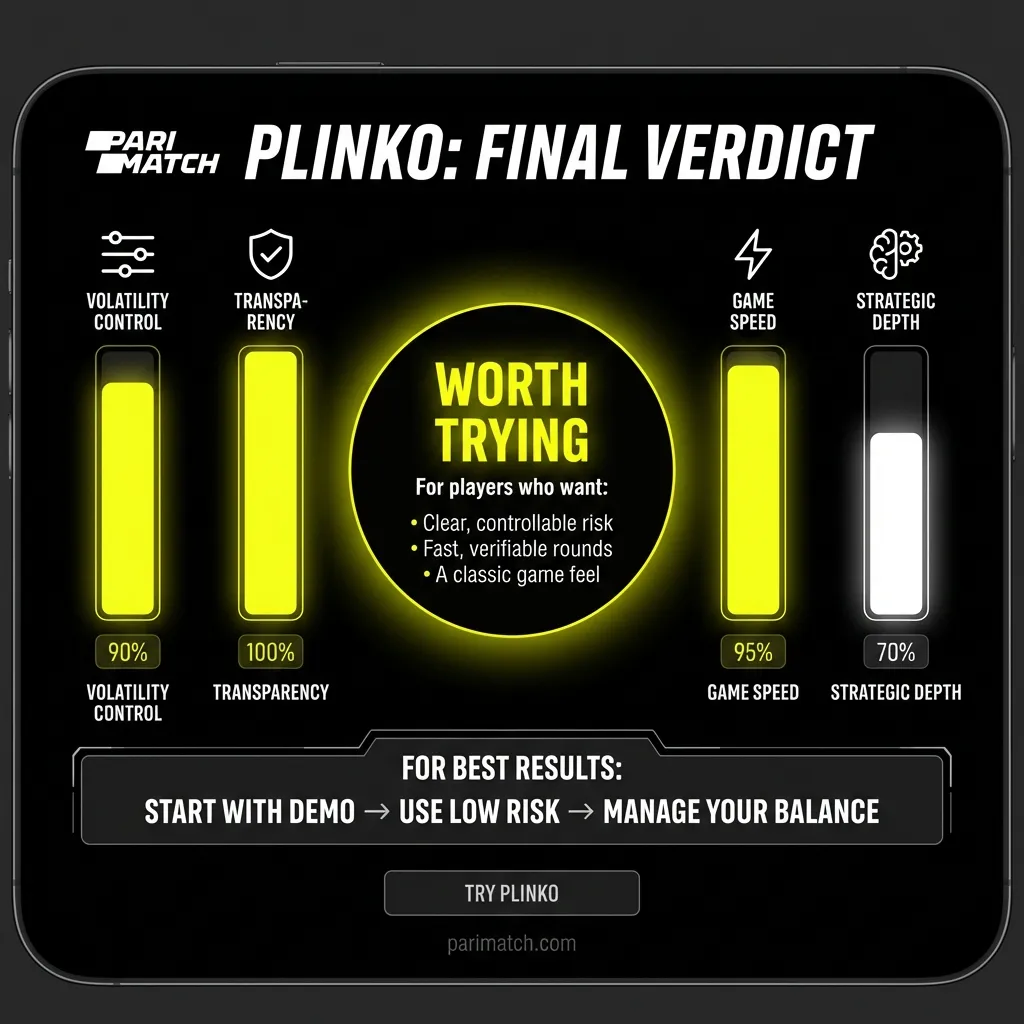
Plinko review India highlights a game built on clear rules, short rounds, and a strong visual layout that fits the quick sessions many Indian users prefer. The board structure and fixed multipliers suit low-skill players who want an RNG title without complex rules. The strengths include adjustable risk levels, broad row settings, and transparent multiplier pockets. Plinko also works well on mobile, which supports the habits of users who play in short intervals.

The main weaknesses come from its volatility. High-risk modes can drain a bankroll fast, and edge-pocket rewards fall inside a low-probability zone. These traits support game suitability for users who like light, low-effort casino content.

Is Plinko good? It stands as a solid choice for users who want a fast casino title with clear controls, open RNG mechanics, and flexible risk settings, as long as they understand that outcomes depend entirely on randomness.

Review summary - pros and cons of playing Plinko on Parimatch

Cookies Consent

We use cookies to enhance your browsing experience, personalise content and ads, provide social media features, and analyse our traffic.

By clicking "Accept All Cookies", you consent to the use of cookies or similar technologies as described in our Cookies policy and Privacy policy.

You can change your choice anytime by clicking "Customise". Please note that by rejecting some cookies, you may not be able to access the full functionality of our website.

Manage Preferences

Strictly necessary cookies
Functionality cookies
Advertising cookies